
Climate change and the future of the Montepulciano grape: A delicate balance
Facing the future: Climate change and Montepulciano
As climate change accelerates, its effects are becoming increasingly visible in Montepulciano vineyards.
In Marche, the time to reach optimal ripeness (21.5 °Babo) has varied by up to 40 days over a 13-year span.
Warmer years result in significantly earlier harvests, compressing the window between bud burst and picking.
This leads to:
Higher sugar content and lower acidity
Potential for overripe flavors and elevated alcohol levels
Yield reductions (up to 1.86 t/ha for every 100 degree-day increase)
Risks like sunburn, ripening blockage, and loss of anthocyanins (color compounds)
Yet all is not lost. Innovative strategies are being explored:
Fruit-zone cooling systems (like misting) to mitigate extreme heat
Shifting vineyards to higher altitudes for cooler growing conditions
Selecting drought-resistant clones to adapt to changing rainfall patterns
Montepulciano has shown remarkable resilience under stress, with good photosynthetic efficiency and adaptability, but the urgency to innovate is growing.
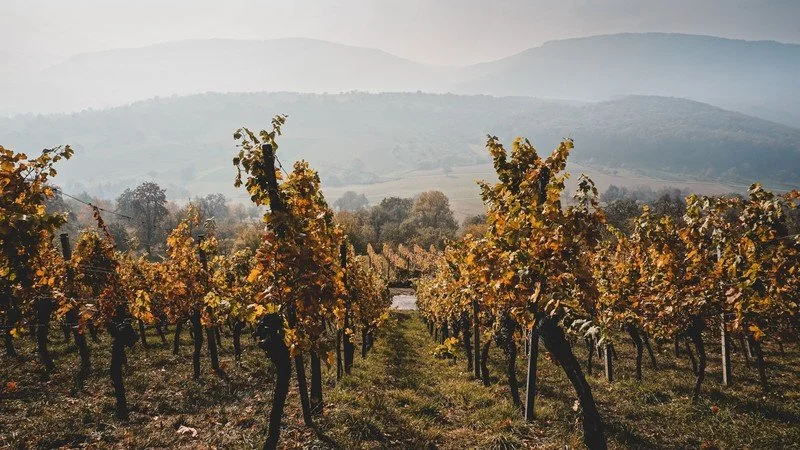
The climate's role in ripening and character
The unique interplay of the Adriatic Sea and the Apennine Mountains creates a moderate climate in Marche, with warm summers and mild winters that allow for slow and even grape ripening.
From March to July, thermal trends play a pivotal role in shaping Montepulciano’s profile.
An increase of 100 degree-days during this early-season period accelerates ripening, leading to:
A reduction of about 0.85 g/L in must acidity at harvest
An increase in the sugar-to-acid ratio by approximately 0.75
Earlier harvests by up to 14 days
While this can result in richer, higher-alcohol wines, it also presents challenges. Winemakers like Luca Lanari respond with adaptive practices like canopy management and careful harvest timing to maintain balance and preserve freshness.
Taste the resilience in every bottle.
Support winemakers navigating climate change - discover Montepulciano’s evolving character in our curated selection.