
Not all wines are created equal — what science says about how your body handles what's in the glass
Have you ever noticed that some wines just feel different the morning after?
Not stronger or weaker. Not more or less expensive. Just different. Lighter in the body. Clearer in the head. As if the wine passed through you rather than staying behind.
It's one of those things people say quietly, almost apologetically, because it sounds unscientific. Subjective. Maybe even a little precious.
But what if it isn't?
A study that took the question seriously
A few years ago, an Italian research team, led by Federico Francesco Ferrero and composed of independent scientists and researchers from the University of Turin, with collaboration from the Politecnico di Torino, decided to investigate whether the body actually metabolises different wines differently.Not different grapes. Not different alcohol levels. The same grape, the same region, the same residual sugar, the same alcohol content. The only variable: how the wine was made. One produced without synthetic pesticides, without selected yeasts, without filtration, and without added sulphites. The other, a conventionally produced wine.The study was conducted as a triple-blind experiment, meaning that neither the participants, nor the researchers, nor the data analysts knew which wine was which. Forty volunteers, carefully selected from over 13,000 candidates to match body type, lifestyle, diet, and alcohol habits. Each person drank both wines, one week apart, in controlled conditions. Blood alcohol was measured every twenty minutes for over two hours.What they found
The results were striking. The wine made with minimal intervention consistently produced lower blood alcohol peaks. And while only four participants exceeded the legal driving limit of 0.5 g/l after drinking the minimally produced wine, nine exceeded it after the conventional one.Same grape. Same alcohol. Different outcome.A follow-up study from the Politecnico di Torino took it further, using a driving simulator to measure behaviour. Participants who had consumed the conventional wine showed more aggressive driving patterns. Those who drank the other wine behaved almost indistinguishably from the control group, who had consumed a non-alcoholic drink.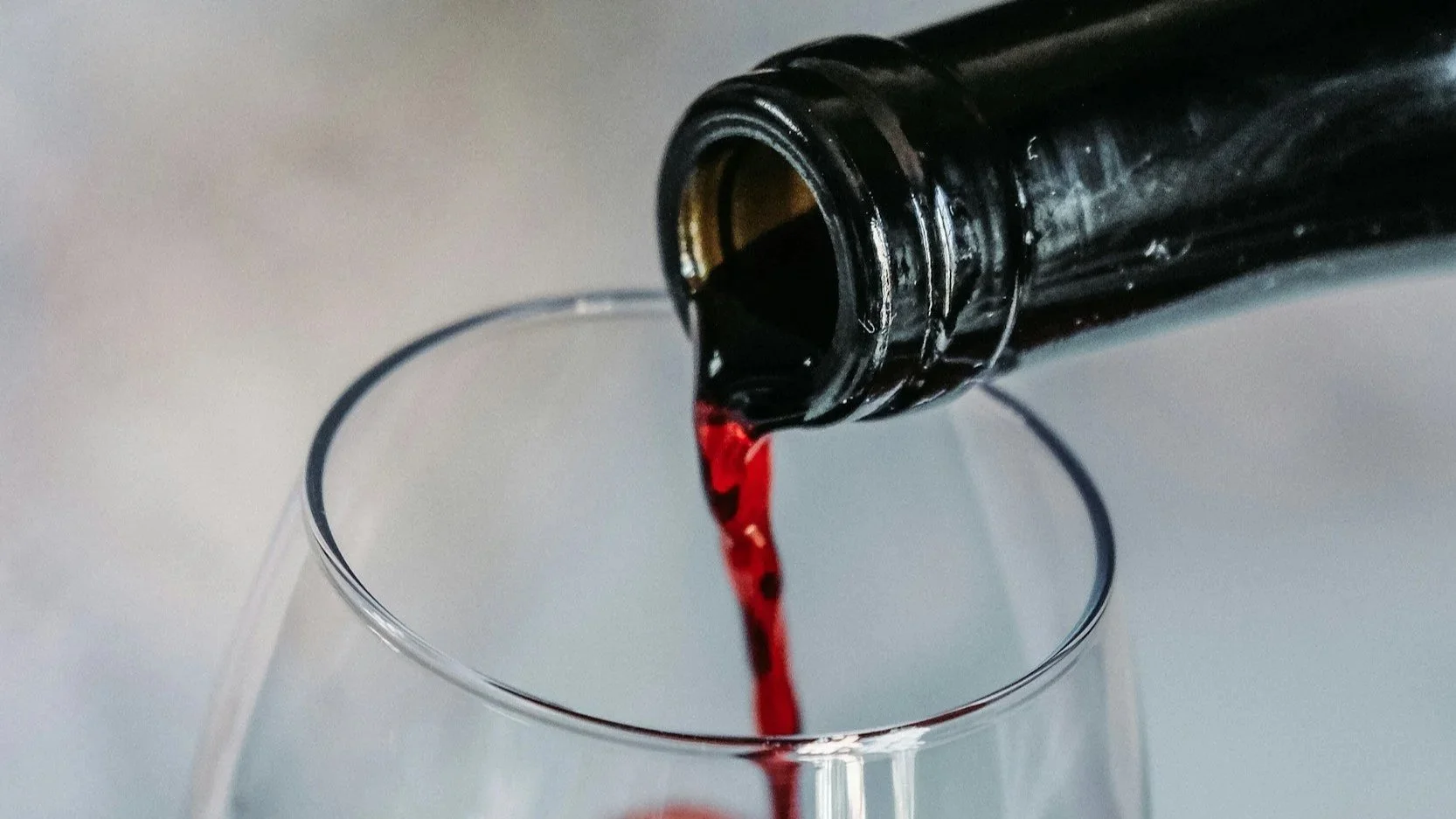
The bottleneck in the liver
The proposed explanation is disarmingly logical. The liver uses a specific set of enzymes to break down alcohol. But those same enzymes are also responsible for neutralising pesticide residues, synthetic additives, and excess sulphites. When those substances are present in the wine, they compete for the same metabolic pathway — creating a bottleneck. The alcohol waits in line, so to speak, and stays in the bloodstream longer.Ferrero draws a compelling parallel: it's no different from taking certain medications with wine. Some drugs are processed by the same liver enzymes, which is why your doctor tells you not to mix them with alcohol. The mechanism is the same - just a different set of substances competing for the same exit.What this means for us and why we choose the producers we do
At Porcalorca, we don't use the word natural to describe our wines. Partly because the term means different things to different people. Partly because what matters to us is more specific than a label.Every producer we work with farms sustainably or biodynamically. They use indigenous yeasts. They avoid synthetic pesticides. They intervene only when absolutely necessary — and even then, as little as possible. Not because of ideology, but because of a deep, practical respect for the grape, the soil, and the person who will eventually drink the wine.This study doesn't prove that all wines made this way are healthier. The researchers themselves are careful to point out that this was a preliminary study — two wines, forty people, one comparison. More research is needed.But it does something important: it gives scientific language to something that winemakers and sommeliers have observed for generations. That how a wine is made doesn't just affect its taste. It affects how your body receives it.The old Italian saying puts it more simply: drink well, drink little, and drink with food.

The bigger picture
Ferrero frames the study beautifully within a broader context. Sunlight is classified as a carcinogen, and yet we need it for vitamin D. Cured meats are in the same risk category, and yet nobody is campaigning to ban prosciutto. The question is never simply whether something is harmful, but how much, how often, and what else is in it.
When it comes to wine, the conversation should not be about fear. It should be about awareness. About understanding that a glass of wine from a producer who works with the land, who uses no synthetic shortcuts, who lets the fermentation happen on its own terms — that glass may, quite literally, sit differently in your body.
And that is worth knowing.
The original article by Federico Francesco Ferrero was published on Triple A's magazine. The two peer-reviewed studies can be found here:
At Porcalorca, we import exclusively from small, family-owned Italian producers who farm sustainably and intervene as little as possible. Not because it's trendy but because it's right.
Discover our wines at porcalorca.com.