
Farming for Flavor, Family, and the Generations Still to Come
Sustainability Isn’t a Strategy - It’s a Way of Life
Long before “organic” became a marketing buzzword, Romanelli was already farming in tune with nature. Since the estate’s founding in 1978, sustainability hasn’t been a trend — it has been the foundation.
From the soil to the cellar, from the vines to the olive groves, the entire estate is a living ecosystem — carefully nurtured, never forced.
“We don’t do this to follow a market. We do this because it’s how we were raised,” Devis told us.
Organic Farming, Rooted in Regeneration
Romanelli’s approach goes far beyond certification. This is regenerative viticulture in practice:
Cover crops to enrich the soil
Bird boxes and natural habitats to foster biodiversity
Minimal intervention in vineyard and cellar
Natural pest control, no synthetic chemicals
Closed-loop systems between vines and olive trees
The result? Healthy vines, resilient ecosystems, and wines that express the true voice of the land.
Le Tese: Biodiversity in Action
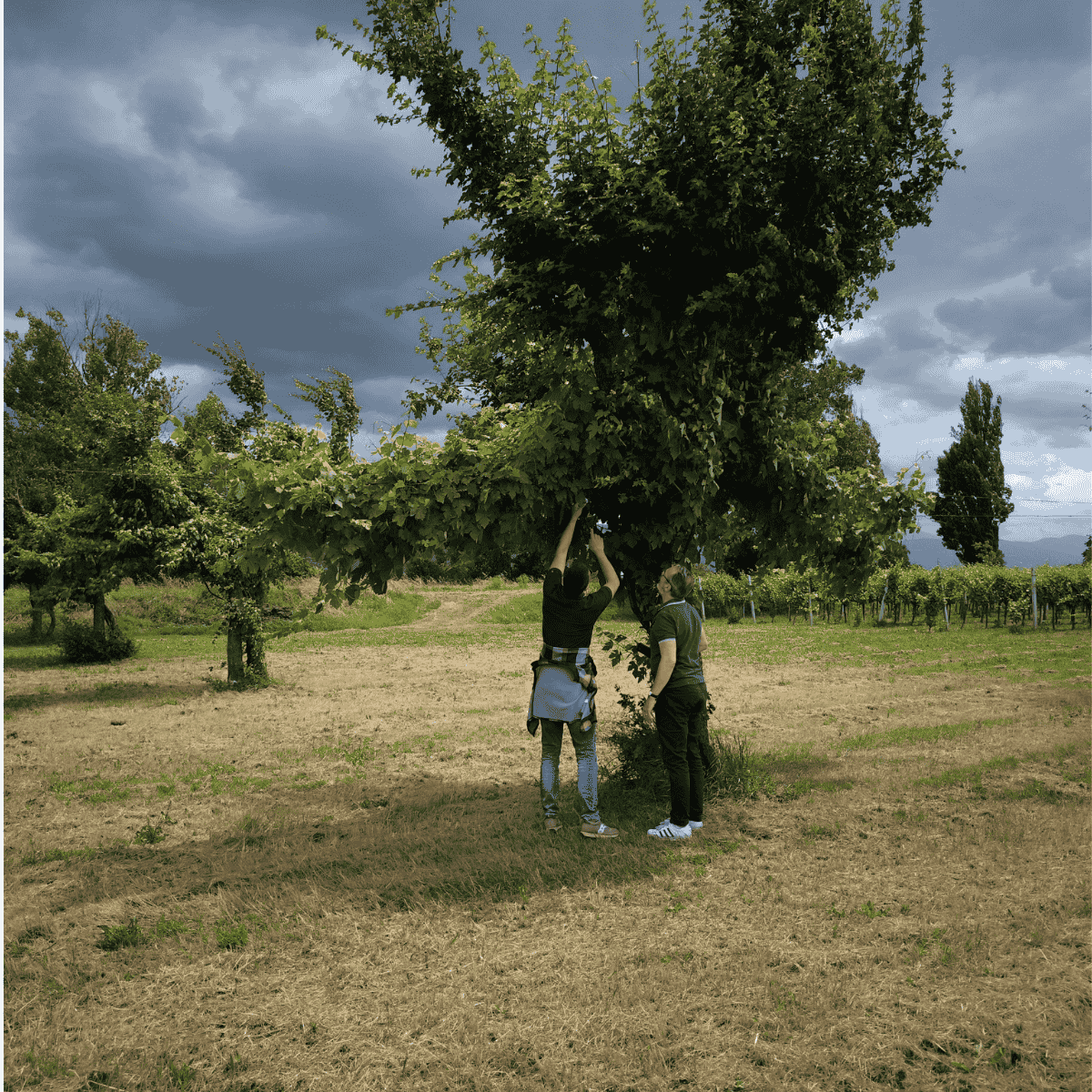
Nowhere is this philosophy more visible than in the Le Tese vineyard, where Trebbiano Spoletino vines climb living maple trees — an ancient Umbrian tradition known as vino maritato.
This isn’t just romance. It’s a functional ecosystem that preserves native species, reduces monoculture, and promotes vineyard resilience. The resulting wine, Le Tese, is living history in a bottle.
Olive Groves: The Other Half of Romanelli’s Soul
Wine may be the headline at Romanelli, but the olive trees are just as essential. Spread across twelve hectares, their ancient groves are farmed organically and harvested by hand.
The result is an award-winning extra virgin olive oil, cold-pressed within hours to capture freshness and intensity. Just like the wines, it reflects the land’s balance — green, vibrant, and unmistakably Umbrian.
For the Romanelli family, wine and olive oil are inseparable threads in the same tapestry: two expressions of a philosophy that prizes flavor, family, and respect for future generations.
Adapting to a Changing Climate
Romanelli is also adapting to climate challenges with higher-altitude vineyards, soil and moisture monitoring, and a willingness to let each vintage speak for itself. This is farming with intention, guided by the land rather than controlling it.
Taste the Future of Tradition
When you choose Romanelli, you’re not just choosing clean, expressive wines. You’re supporting a family who farms with foresight — and with love.
Porcalorca - Where every bottle tells a story.