
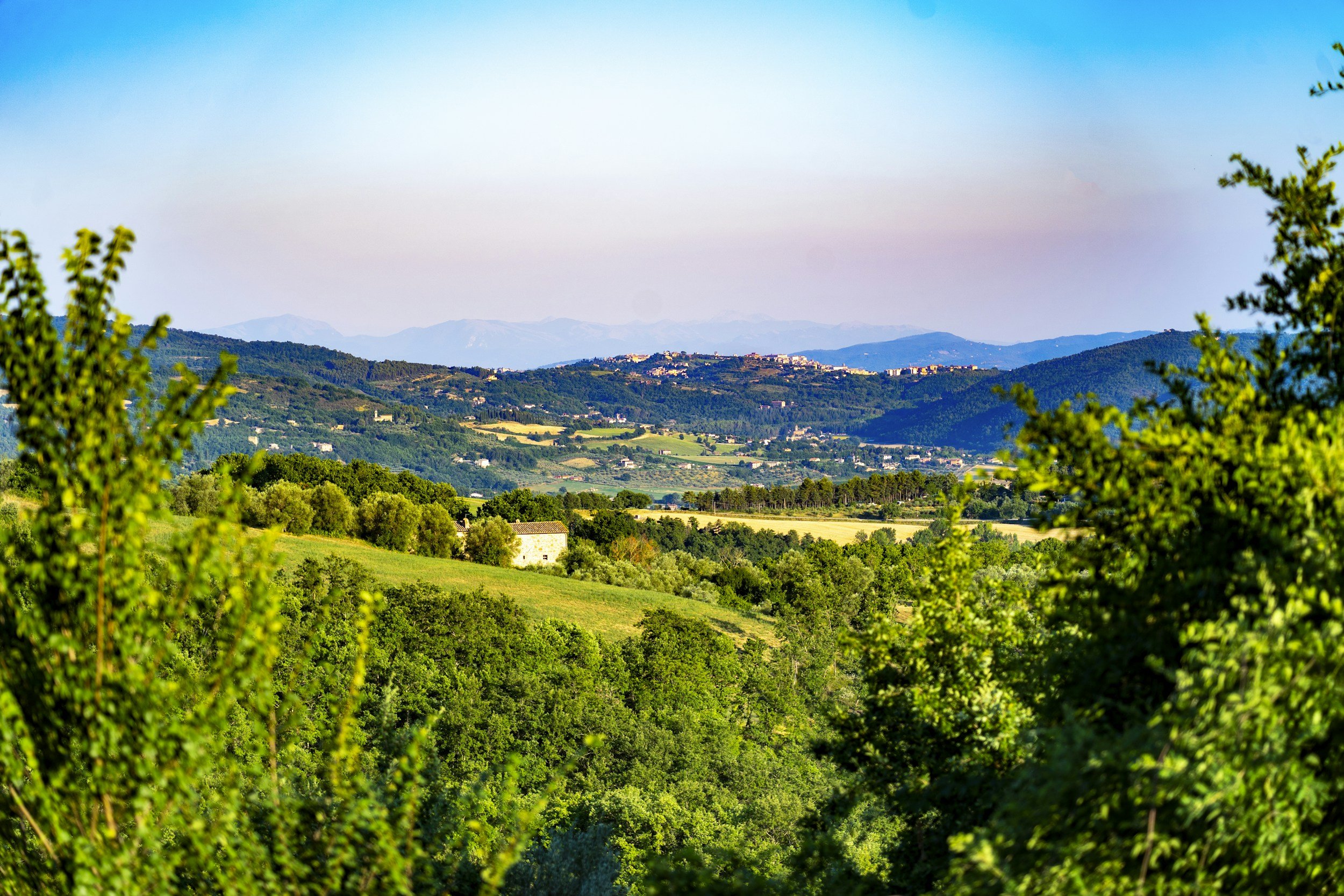
Umbria
Italy's Green Heart
Without a coastline and often overshadowed by its famous neighbour Tuscany, Umbria remains one of Italy's best-kept secrets. Here, ancient hill towns, rolling vineyards and generations of family winemakers create wines that are as authentic as the landscape itself.
Why We Love Umbria
There is something wonderfully unhurried about Umbria.
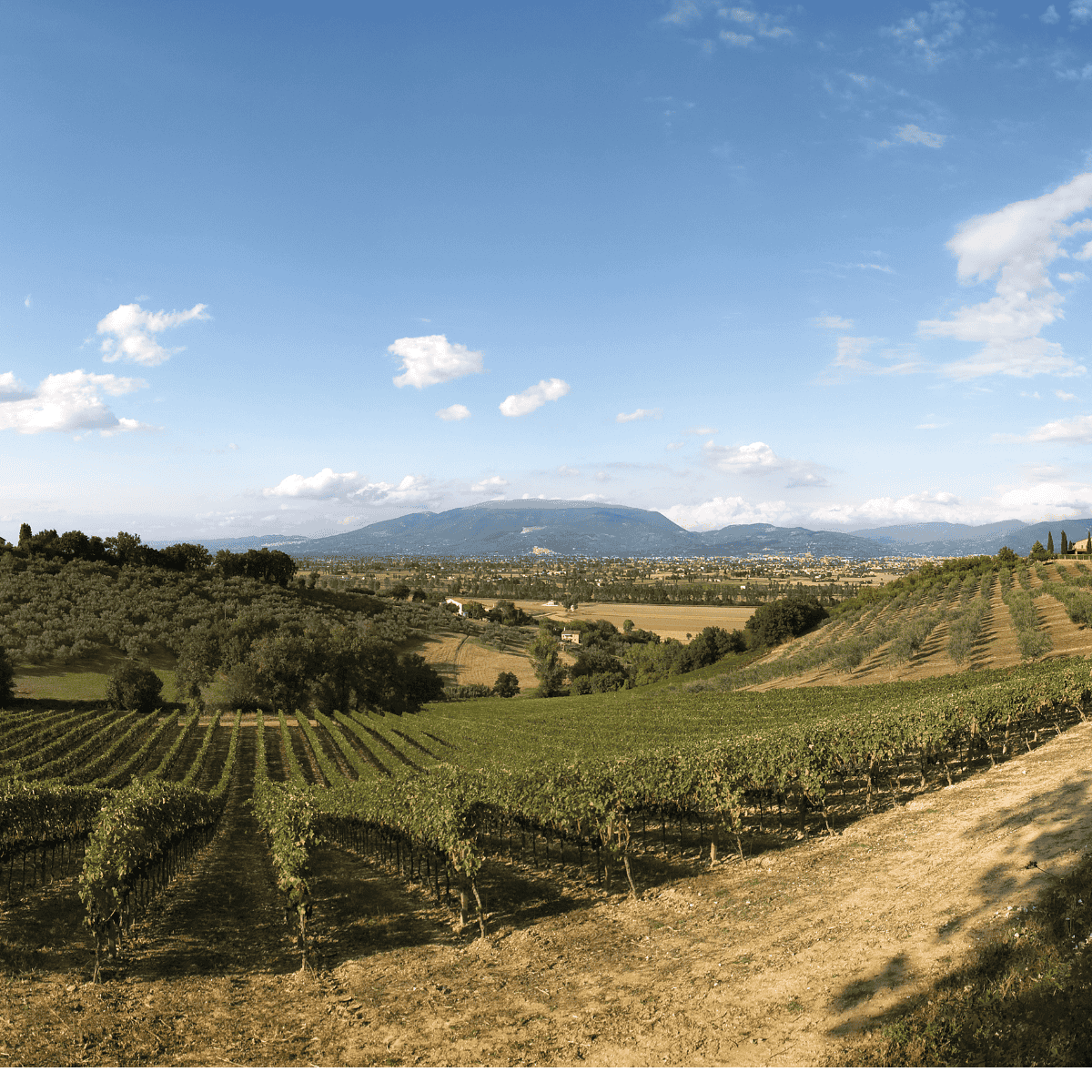
Life moves at its own pace. Vineyards sit among olive groves, medieval villages overlook the valleys, and traditions are preserved not because they are fashionable, but because they have always belonged here.
While many know Umbria for Assisi and Perugia, wine lovers discover a region filled with indigenous grape varieties, remarkable biodiversity and families who have quietly refined their craft for generations.
At Porcalorca, we love Umbria because it reminds us that some of Italy's greatest discoveries are found away from the crowds.
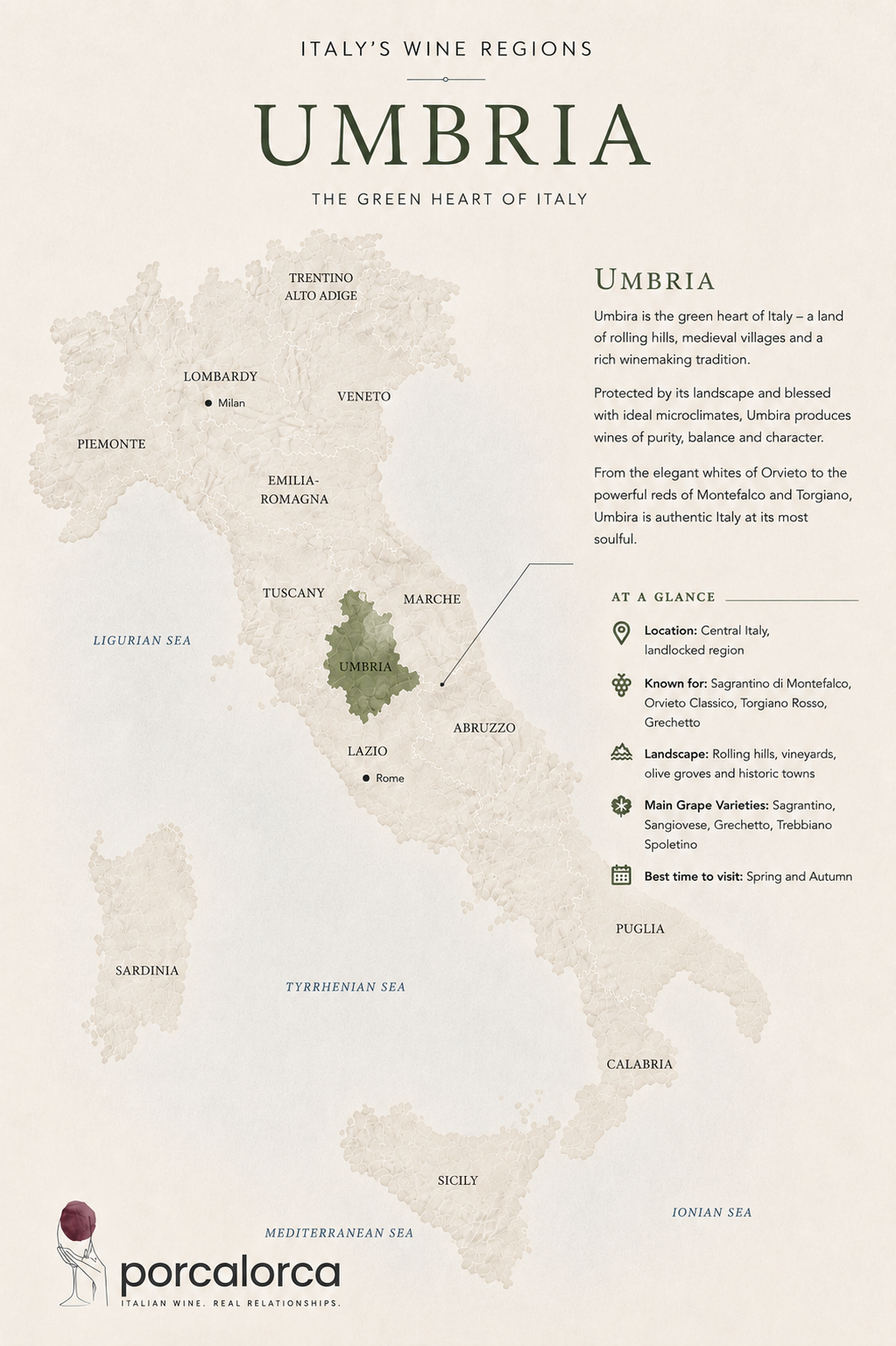
Umbria at a Glance
Location
Central Italy
Known For
Montefalco, Spoleto and Assisi
Landscape
Rolling hills, forests, vineyards and medieval hill towns
Signature Wines
Montefalco Sagrantino DOCG, Montefalco Rosso DOC and Trebbiano Spoletino DOC
Main Grape Varieties
Sagrantino, Trebbiano Spoletino, Sangiovese and Grechetto
Home to
Romanelli Family
A Journey Through Umbria
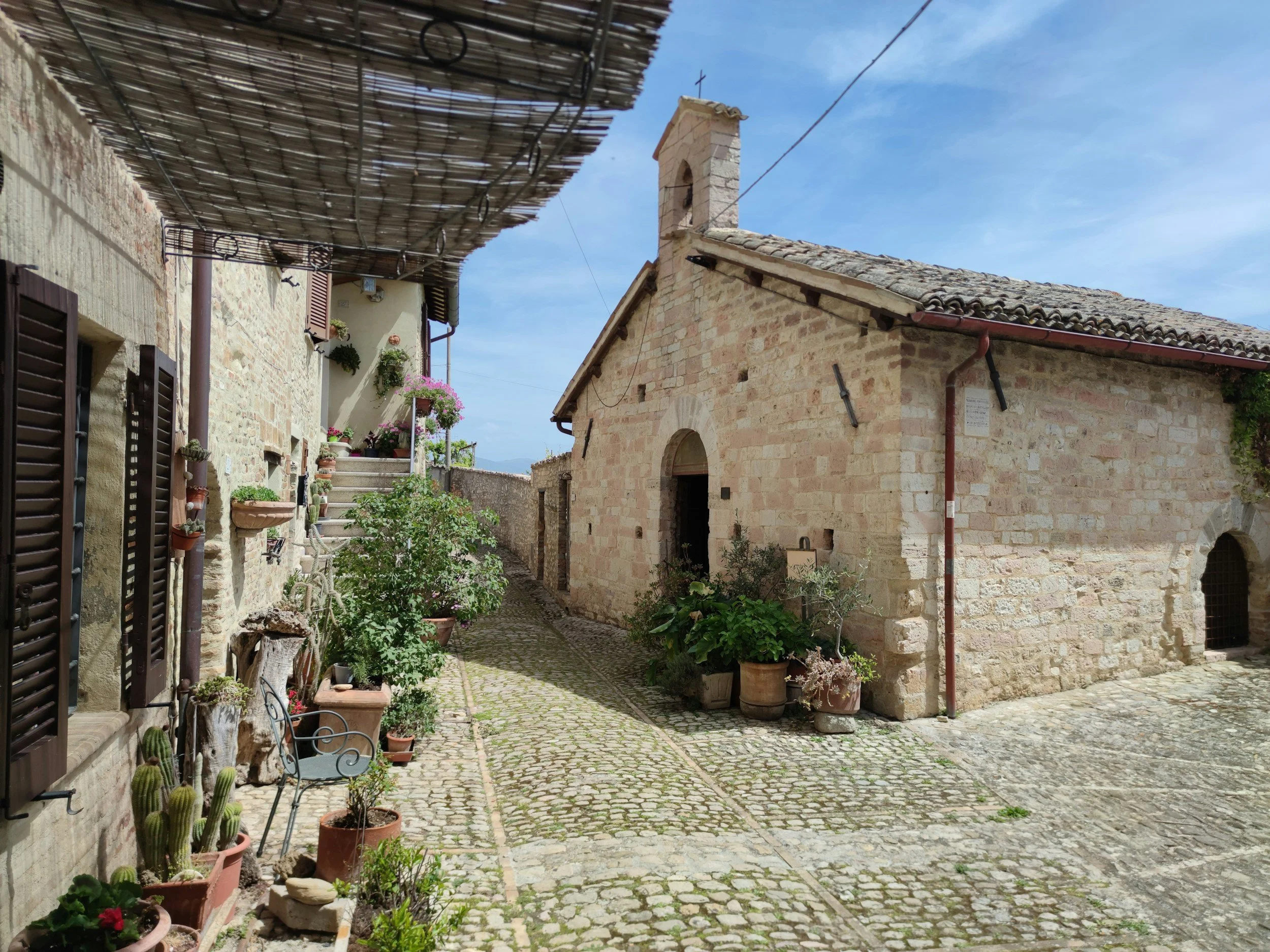
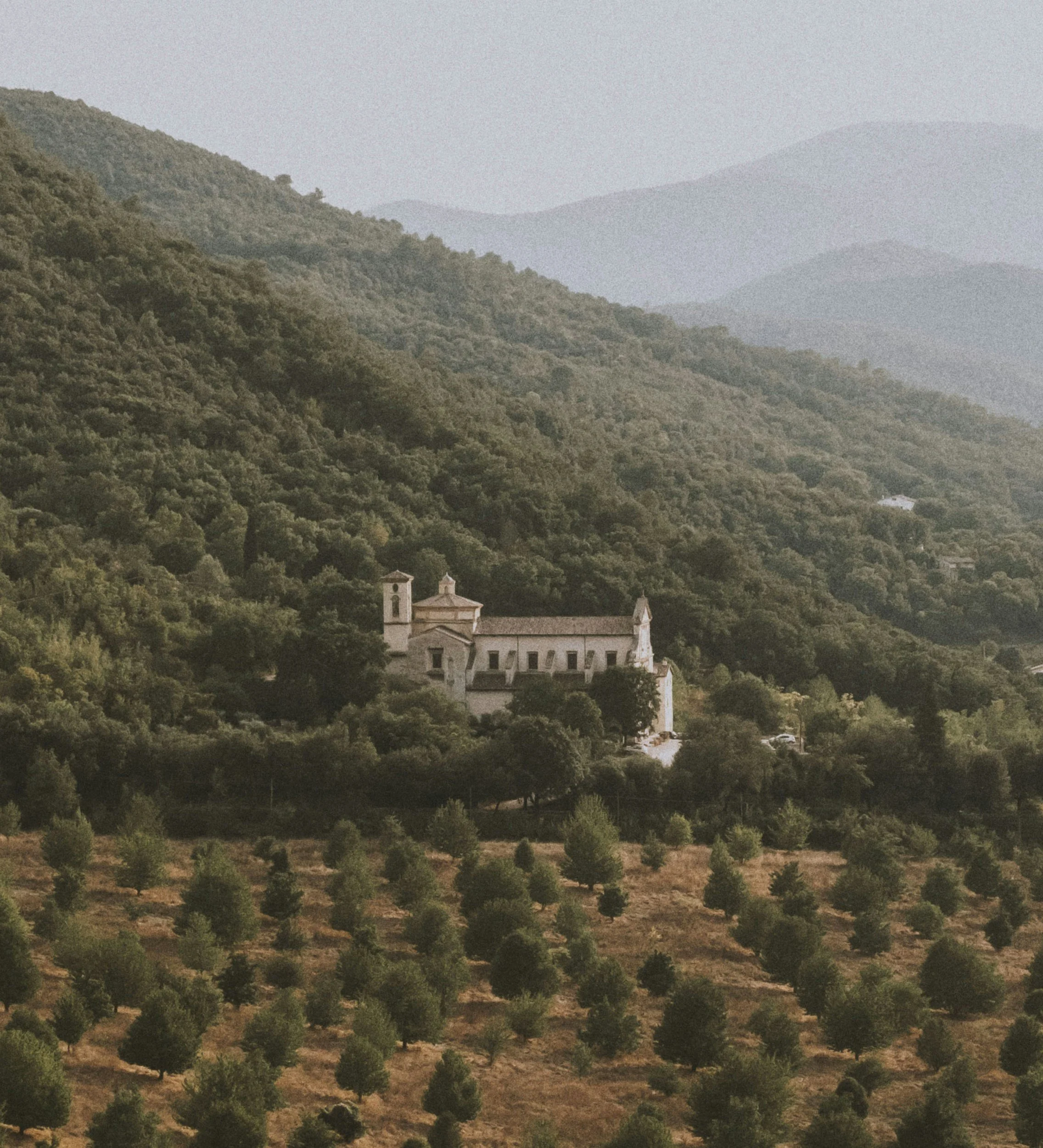
Montefalco - The Balcony of Umbria
Known as the "Balcony of Umbria," Montefalco offers breathtaking views across the surrounding valleys. It is here that the powerful Sagrantino grape has been cultivated for centuries, producing one of Italy's most distinctive red wines.
Spoleto - The Revival of Trebbiano Spoletino
Around the historic town of Spoleto, an ancient white grape has found new life. Once almost forgotten, Trebbiano Spoletino has become one of Italy's most exciting indigenous varieties, producing wines of freshness, texture and remarkable character.
Featured Producer
Romanelli Family
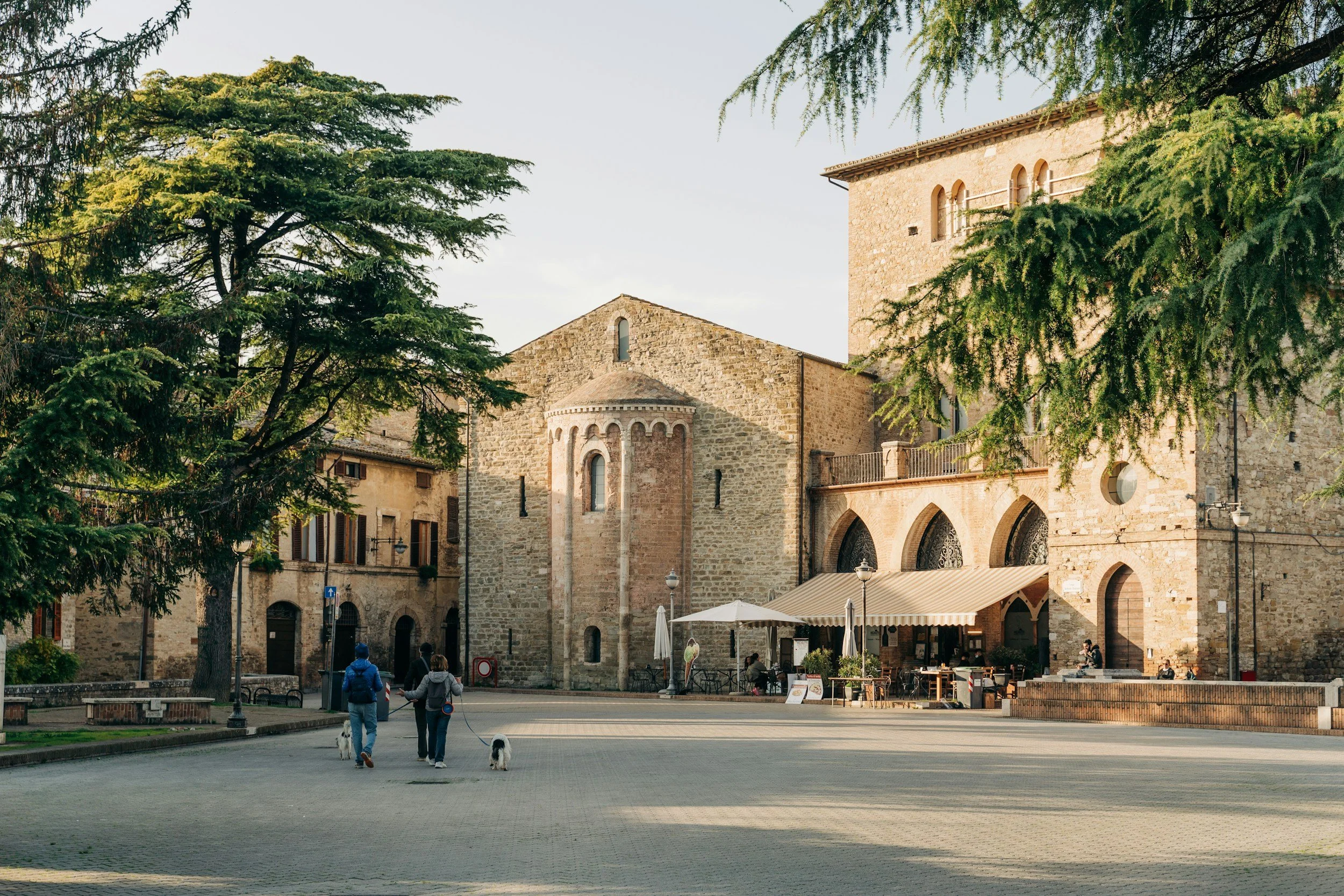
Bevagna - Where Time Stands Still
Surrounded by vineyards and olive groves, Bevagna is one of Umbria's most charming medieval towns. Its quiet streets and centuries-old traditions perfectly capture the authentic spirit of the region.
Trebbiano Spoletino -
A Forgotten Grape, Rediscovered
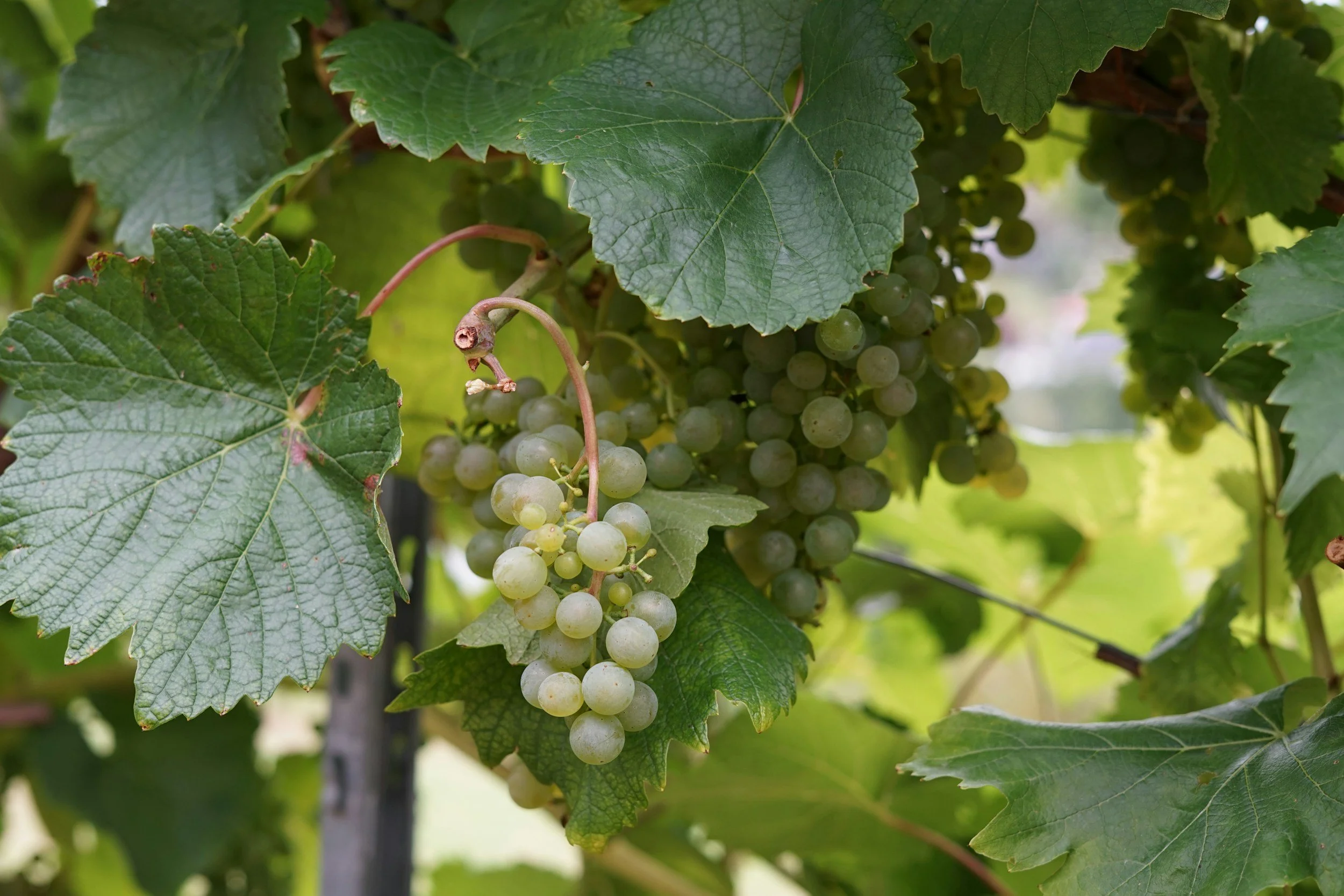
Trebbiano Spoletino is an ancient local grape variety from Umbria that came close to disappearing.
For many years, it was used mainly for simple table wines or blended into other wines. A small group of producers, including the Romanelli family, began to show that the grape was capable of much more. With careful vineyard work and thoughtful winemaking, Trebbiano Spoletino can produce structured, complex wines with freshness, depth and a strong personality.
Its revival is not only the rediscovery of a grape. It is also the recovery of a part of Umbria’s rural history.
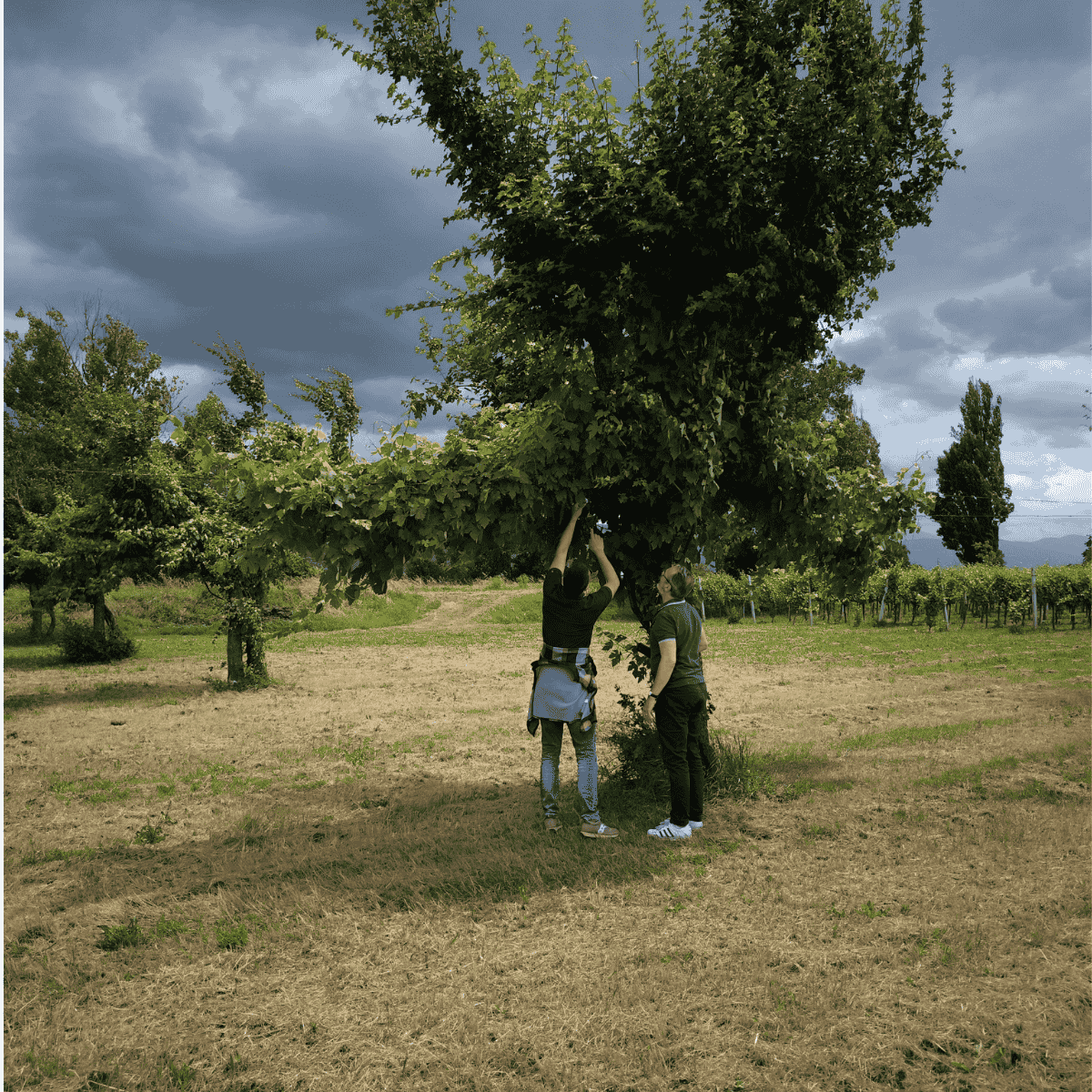
Romanelli also preserves the ancient method known as vino maritato, or “married vines,” a way of growing grapes that dates back to Roman times.
Instead of being trained on conventional vineyard rows, the vines climb living trees, sometimes several metres above the ground. Vegetables and other crops can then be grown beneath them, allowing the same piece of land to support both vines and food.
This traditional farming system reflects a time when vineyards were part of a wider agricultural landscape rather than separated from it. For the Romanelli family, preserving vino maritato is not about nostalgia.
It is about keeping alive a relationship between people, vines and land that has existed for centuries.
Vino Maritato – Vines Married to Trees
Trebbiano Spoletino at a Glance
Region
Umbria
Wine Style
White
Known For
Freshness, texture and mineral character
Typical Aromas
Citrus, white flowers, peach and herbs
Ageing Potential
5–10 years
In the Glass
Expect notes of:
Lemon
White peach
Pear
Wild herbs
White flowers
Almond
Mineral finish
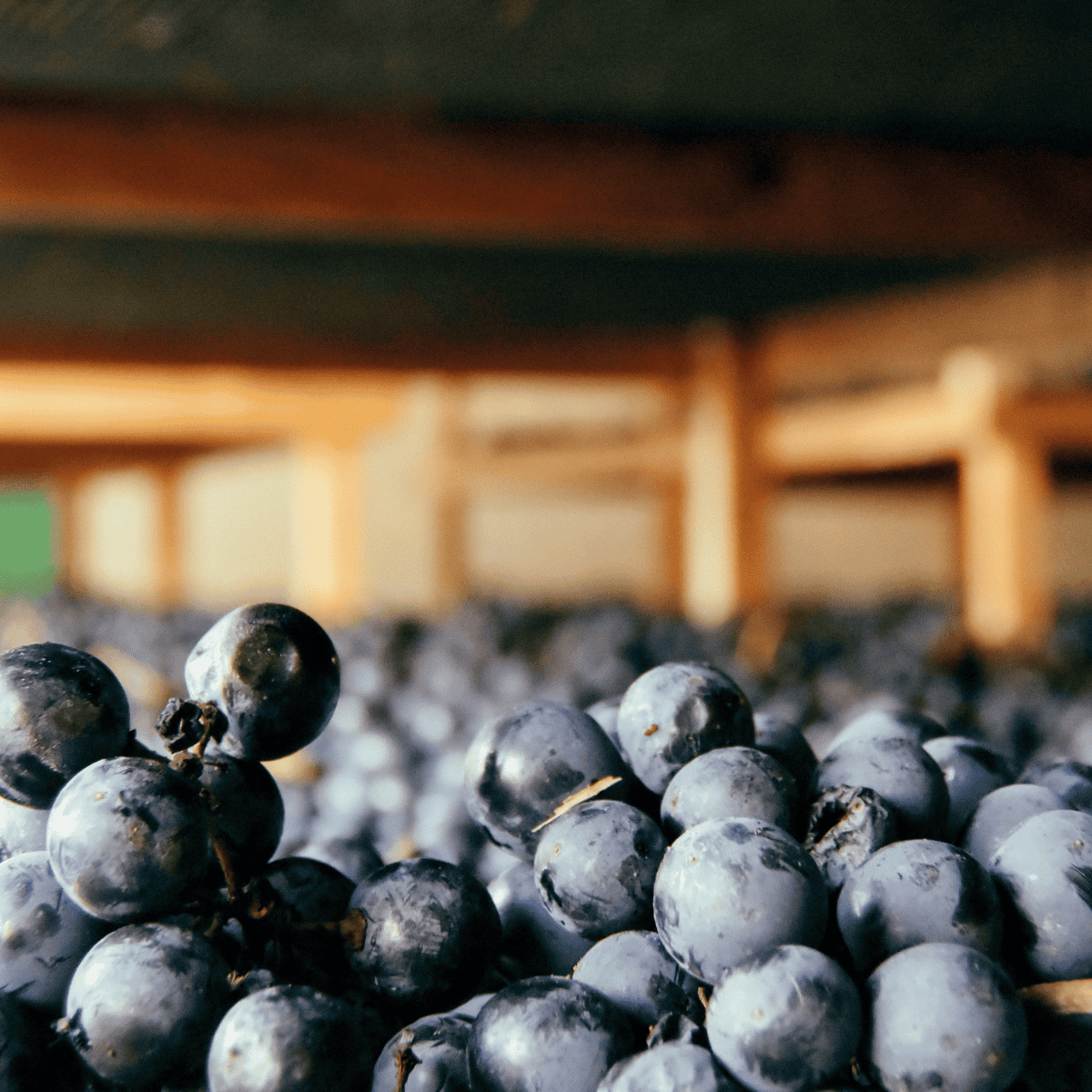
Sagrantino - Power with Patience
If Trebbiano Spoletino represents Umbria's elegance, Sagrantino reveals its strength.
Native to the hills around Montefalco, Sagrantino is one of Italy's most distinctive red grapes. Known for its deep colour, firm tannins and remarkable ageing potential, it produces wines of extraordinary concentration and complexity.
With time, those powerful tannins soften beautifully, revealing layers of dark fruit, spices, leather and earth that make Sagrantino one of Italy's most rewarding wines.
The People Behind the Wines
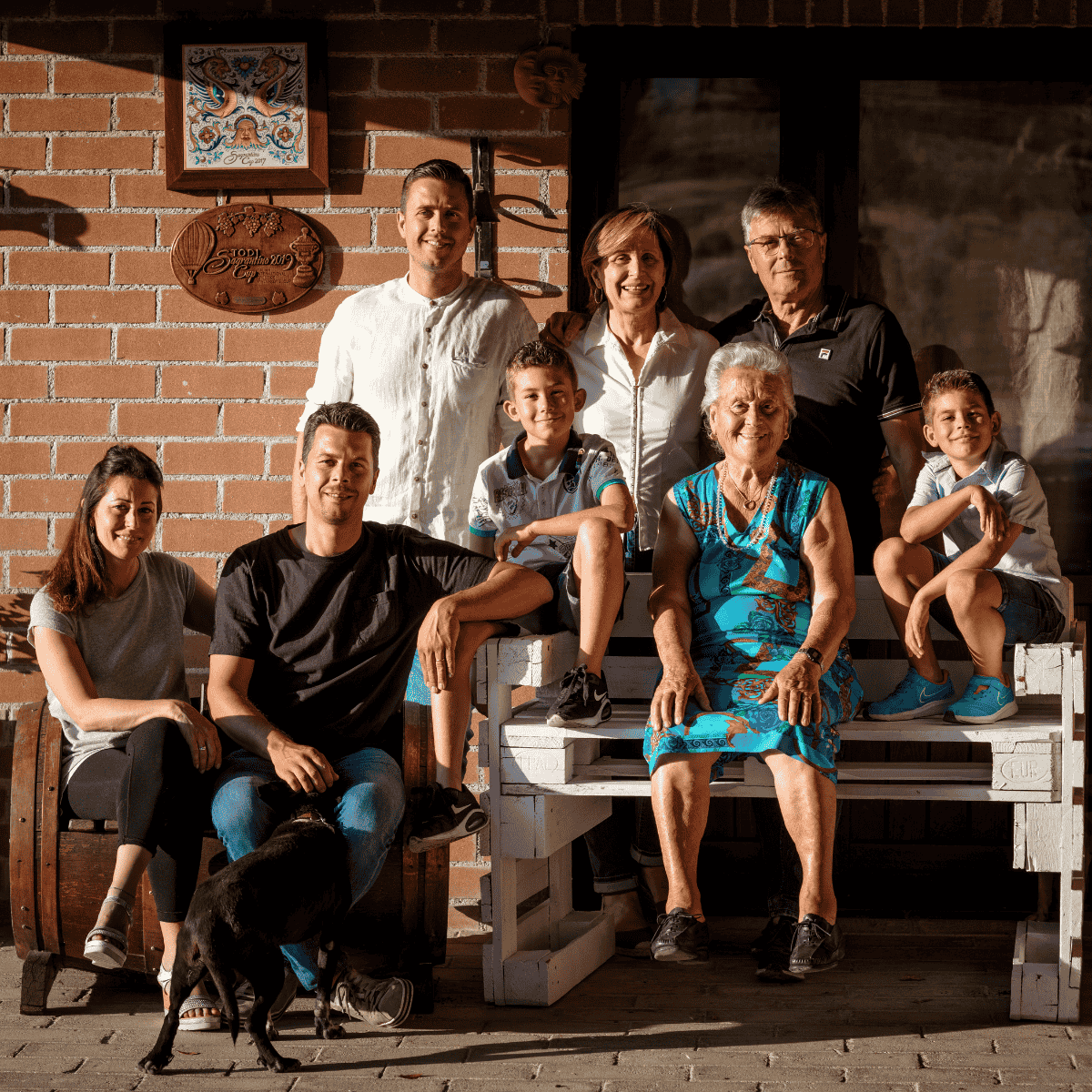
Romanelli Family
For the Romanelli family, winemaking is about preserving the identity of Umbria. From the revival of Trebbiano Spoletino to the bold character of Sagrantino, every wine reflects generations of family tradition, respect for the land and a passion for sharing the true spirit of their region.
Discover Wines from Umbria
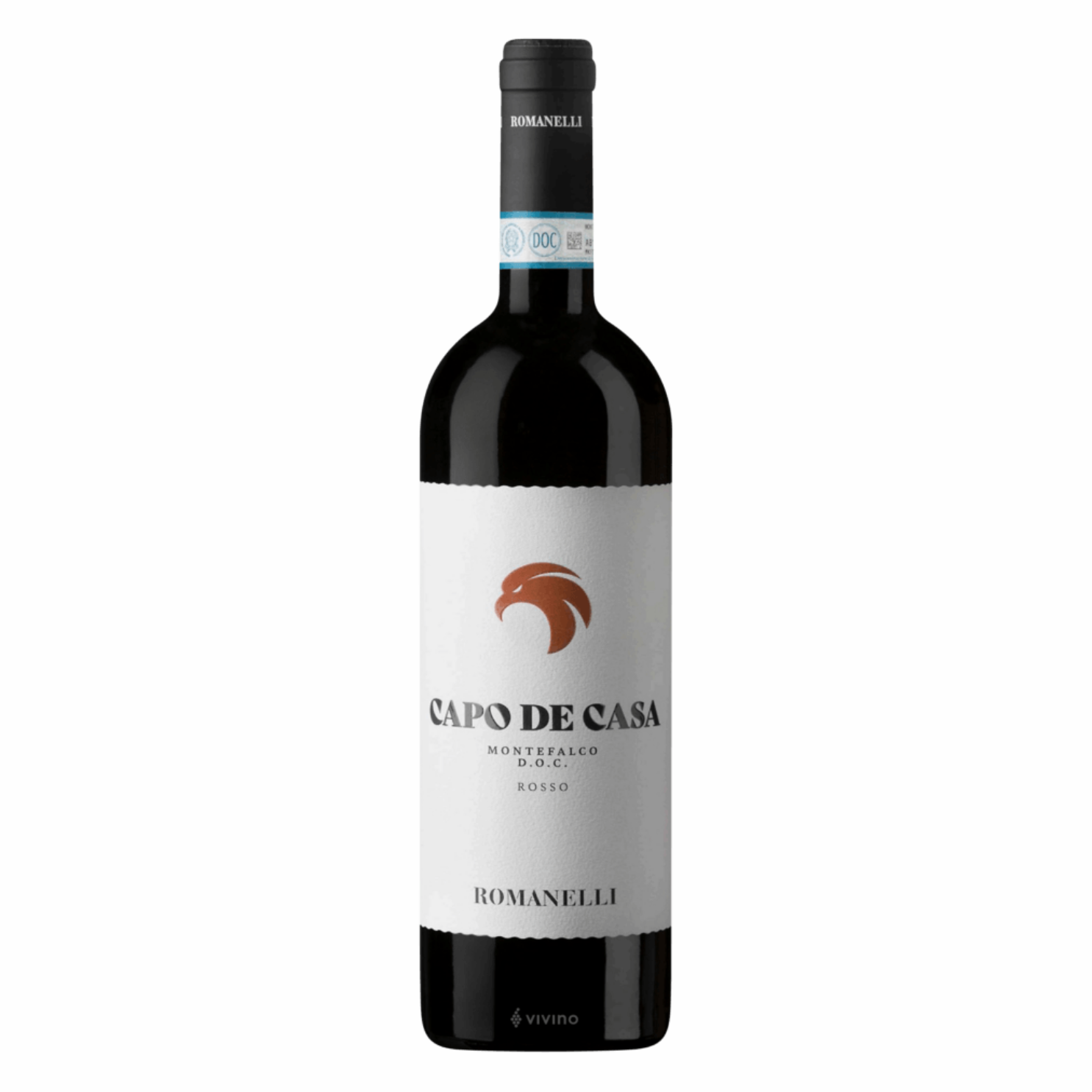
UMBRIA
If Sagrantino embodies the structure, energy, and longevity of Montefalco’s wines, Rosso represents the everyday soul of the territory. Capo de Casa is born from the vineyards of Colle San Clemente, on clay and calcareous-silty soils, from a blend of Sangiovese, Sagrantino, and Merlot. It is a balanced and dynamic wine, combining freshness with depth, a faithful companion to the seasons and the table. Its name recalls the “house wine” of the past, once produced from the grape varieties present in the vineyard and enjoyed during family moments and shared meals.
Grape variety
Sangiovese 65%, Sagrantino 15%, Merlot 20%.
Vineyards of origin
Estate-owned vineyards in Colle San Clemente, Montefalco, at 350 meters above sea level.
Soil: Clay and calcareous-silty loam.
Training system: Spurred Cordon.
Season in the field: Manual harvest in October, with grapes at full phenolic ripeness.
Average yield: 80 q/ha, 5000 vines per hectares.
Vinification
Grapes, harvested and manually picked at full phenolic ripeness, remain in contact with the skins for about 30–45 days, allowing complete extraction of color, aromas, and tannins.
Aging: Aged for at least 18 months in different types of containers, depending on the vineyard of origin, followed by bottle refinement.
Tasting notes
Bright ruby red color. On the nose, aromas of cherry and blackberry blend with subtle spice and a delicate vegetal note. On the palate, structured yet refined, fresh and vibrant, with excellent persistence and balance that invites another sip.
Pairings
Appetizers and first courses from Umbrian tradition, cheeses, cured meats, and rich dishes typical of the Montefalco area. Excellent with first courses featuring black truffle.
Alcohol content and serving temperature
Alcohol content: 14,5% Vol.
Serving Temperature: 16 - 18°C.
End
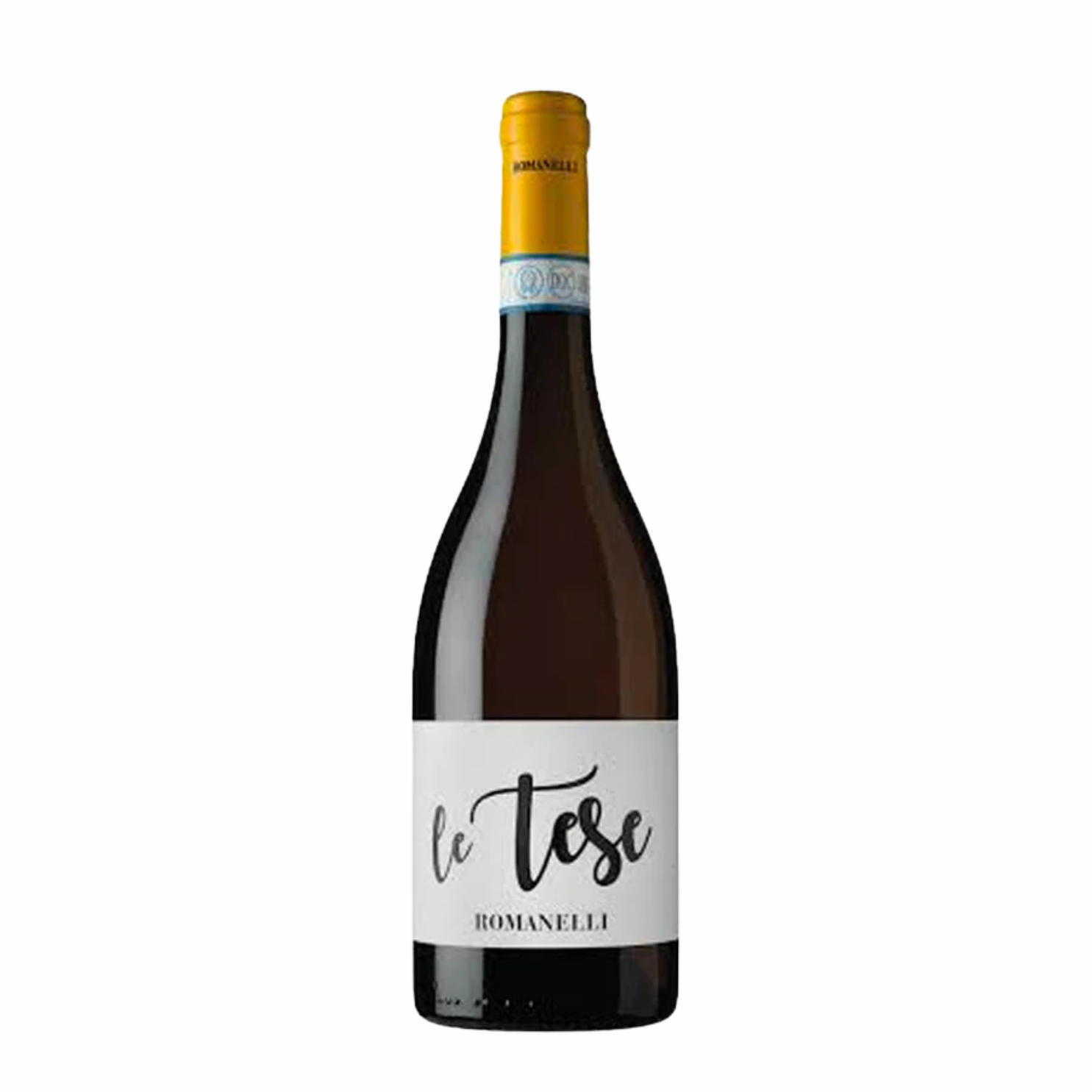
UMBRIA - ORANGE WINE
With the desire to rediscover the most authentic traditions of its territory, Romanelli turned its attention to Trebbiano Spoletino, an ancient Umbrian grape variety of rare elegance. Le Tese comes from vineyards located between Montefalco and Castel Ritaldi, on clay soils that produce highly aromatic grapes, rich in texture and marked by vibrant acidity. Outstanding in its youth, it develops further over time, acquiring even more refined and profound nuances, a white of great charm, telling the inseparable story of grape, land, and winemaker’s hand.
Grape variety
100% Trebbiano Spoletino.
Vineyards of origin
Selection of grapes from estate-owned vineyards in the municipalities of Montefalco and Castel Ritaldi, at an altitude of 220 meters above sea level.
Soil: Clay.
Training system: Guyot, “palmetta” and “vite maritata”.
Season in the field: Regular vintage with manual harvest at the end of October, when the grapes reach full phenolic ripeness.
Average yield: 80 q/ha, 3000 vines per hectares.
Vinification
The grapes ferment in contact with the skins for 40–50 days, extracting aromas, color, and structure, in accordance with the ancient Trebbiano Spoletino tradition.
Aging: 8 months in stainless steel on fine lees, followed by at least 6 months of bottle aging.
Tasting notes
Golden yellow color, typical of medium-long skin maceration. The nose is intense and complex, with notes of ripe citrus, exotic fruits, and yellow-fleshed fruit, enriched with mineral nuances. On the palate it is broad and structured, with great texture and lively acidity that brings balance and lift. Long and persistent finish.
Pairings
Perfect with cheeses and cured meats, egg-based dishes, vegetarian appetizers, and black truffle preparations. Also pairs well with flavorful fish dishes or shellfish.
Alcohol content and serving temperature
Alcohol content: 12,5% Vol.
Serving Temperature: 12 - 14°C.
End
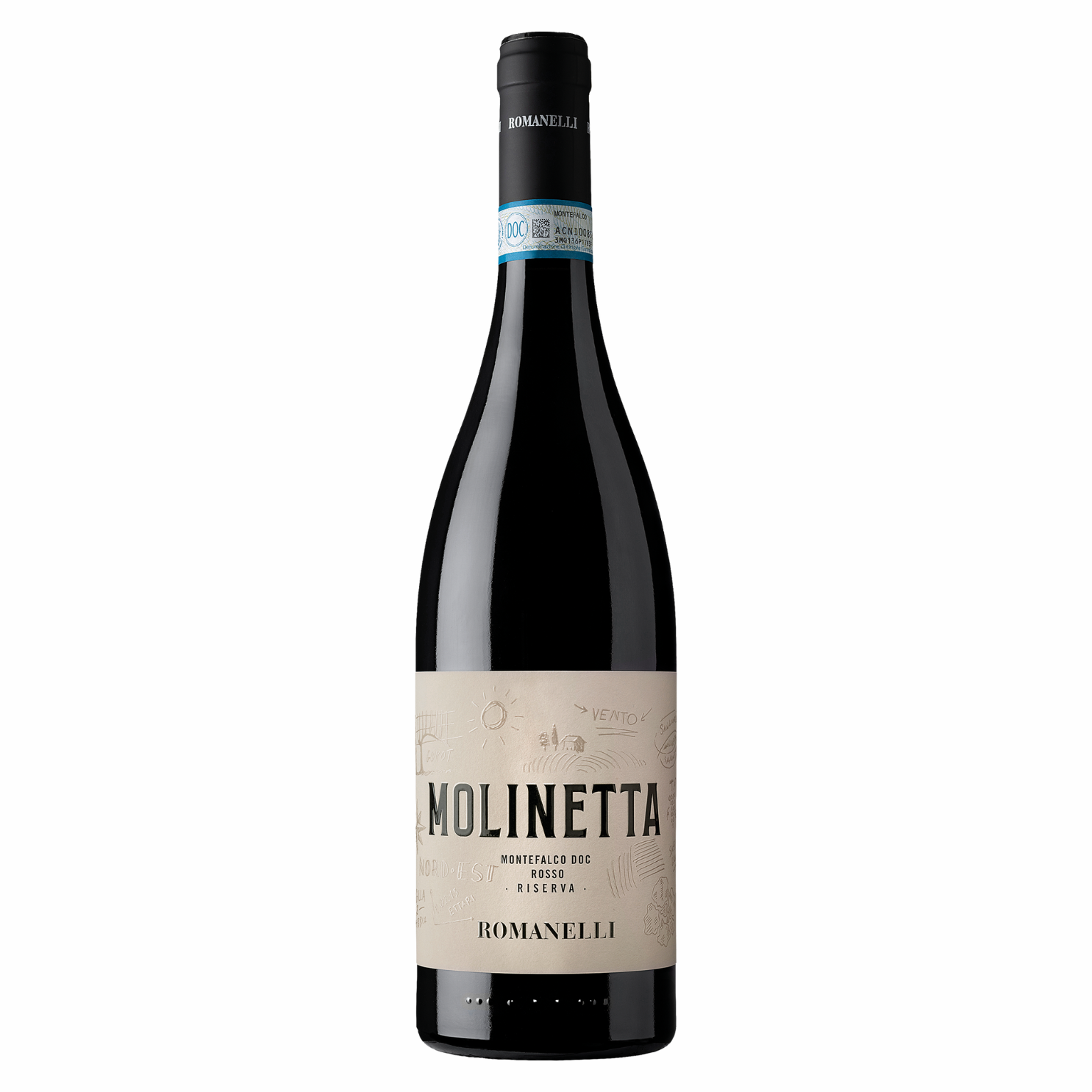
UMBRIA
Molinetta takes its name from an old mill that once stood next to the production area. It comes from a single plot in Colle San Clemente, Montefalco, characterized by sandy-clay-loam soils with limestone deposits. Here, Sangiovese—complemented by a small percentage of Sagrantino—produces wines of remarkable energy, depth, and longevity. Made only in vintages Romanelli considers exceptional, when terroir, variety, climate, and vineyard work come together in perfect harmony.
Grape variety
Sangiovese 80%, Sagrantino 20%.
Vineyards of origin
Estate-owned vineyards in Colle San Clemente, Montefalco, at 350 meters above sea level.
Soil: Sandy-clay-loam with limestone content.
Training system: Spurred Cordon and Guyot.
Season in the field: Manual harvest in October, with grapes at full phenolic ripeness.
Average yield: 70 q/ha, 5000 vines per hectares.
Vinification
Grapes, harvested and manually picked at full phenolic ripeness, maceration on the skins for 45–60 days to extract color, aromas, and noble tannins.
Aging: Aged for at least 24 months in 2,400-liter French oak barrels, followed by at least 12 months of bottle aging.
Tasting notes
Deep ruby red color. The bouquet opens with a rich array of wild berries, cherries, and plums, complemented by elegant toasted notes. On the palate, structure, elegance, and roundness blend harmoniously with firm yet well-integrated tannins.
Pairings
Perfect with grilled red meats, roasts, cured meats, and aged cheeses.
Alcohol content and serving temperature
Alcohol content: 15% Vol.
Serving Temperature: 16 - 18°C.
End
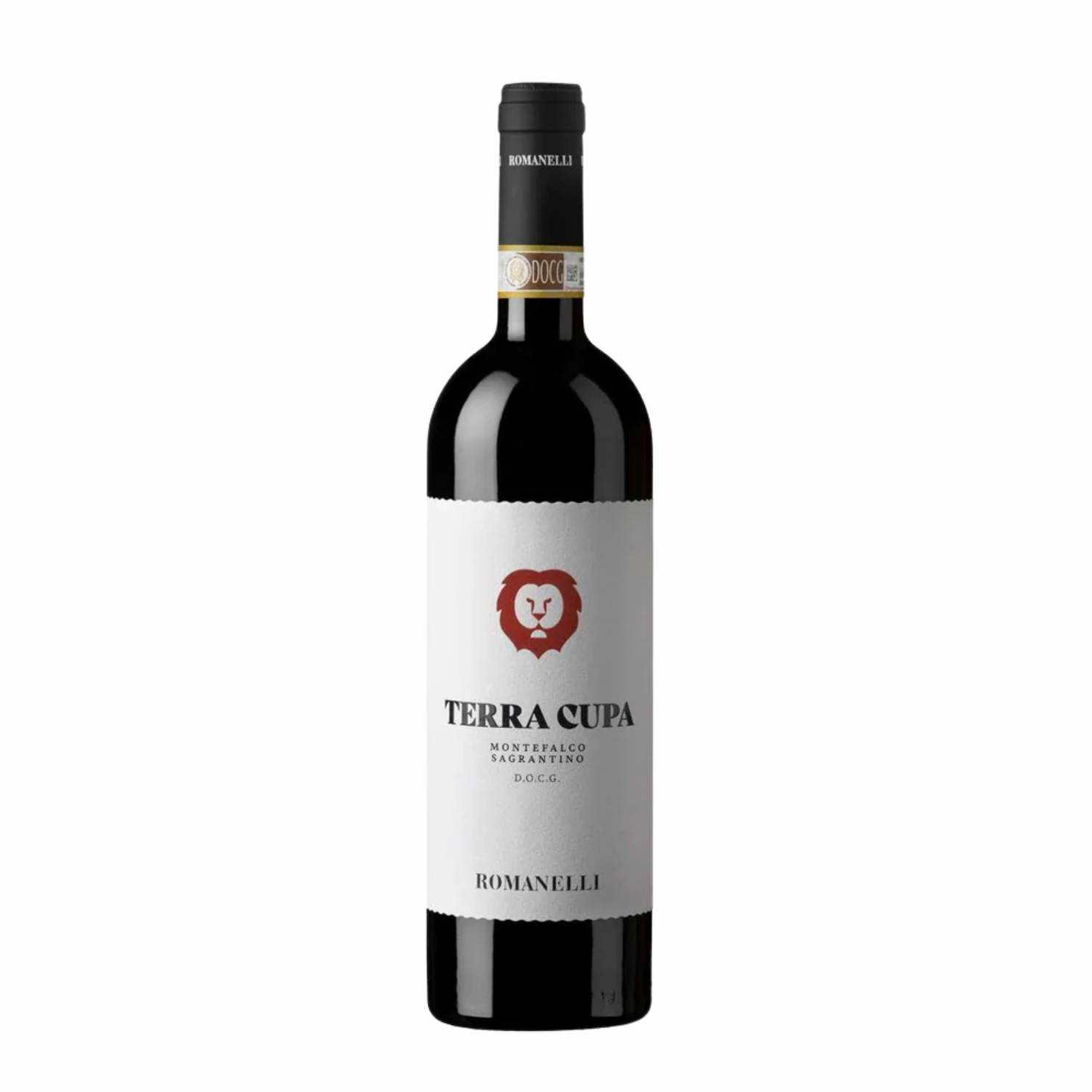
UMBRIA
From the heart of Umbria, on the sun-kissed slopes of Colle San Clemente in Montefalco, comes Terra Cupa, the most iconic Sagrantino from Romanelli Winery. Its name recalls the ancient toponym of the road that runs alongside the estate’s most prestigious vineyard — a site blessed with ideal altitude, exposure, and soil composition. Here, small pebbles mix with clay and limestone, yielding grapes of remarkable aromatic concentration and firm, noble tannins. A wine that embodies the truest spirit of Sagrantino: power, elegance, and longevity.
Grape variety
100% Sagrantino
Vineyards of origin
Selection of the ideal grapes for this wine from Estate-owned vineyards located at 350 meters above sea level in Colle San Clemente, Montefalco (PG).
Soil: Clay and limestone with small pebbles, excellent drainage capacity.
Training system: Spurred Cordon.
Season in the field: Very consistent vintage. A cool and rainy spring was followed by a warm but not excessive summer.
A perfect autumn harvest in terms of weather conditions and grape qualitys.
Average yield: 50 q/ha, 5000 vines per hectares.
Vinification
Grapes, harvested and manually picked at full phenolic ripeness, remain in contact with the skins for about 60 days, allowing complete extraction of color, aromas, and tannins.
Aging: Maturation takes place in oak barrels of various capacities (225–2500 liters) for about 24 months, followed by further bottle aging of at least 12 months before release.
Tasting notes
Deep ruby red with garnet reflections. The bouquet is intense and complex: wild blackberry, ripe cherry, and plumintertwine with balsamic notes, hints of wild herbs, and delicate spicy nuances of black pepper and clove. On the palate, it is powerful and full-bodied, with dense yet finely integrated tannins, a surprising freshness, and a long, elegant, and persistent finish, where fruity and spicy sensations return.
Pairings
Perfect with rich and flavorful dishes: legume and grain soups, stuffed pasta with game ragout, roasted lamb or pork, braised meats and slow-cooked game, aged hard cheeses like Pecorino or Parmigiano Reggiano 36 months.
Alcohol content and serving temperature
Alcohol content: 16% Vol.
Serving Temperature: 16 - 18°C.
End